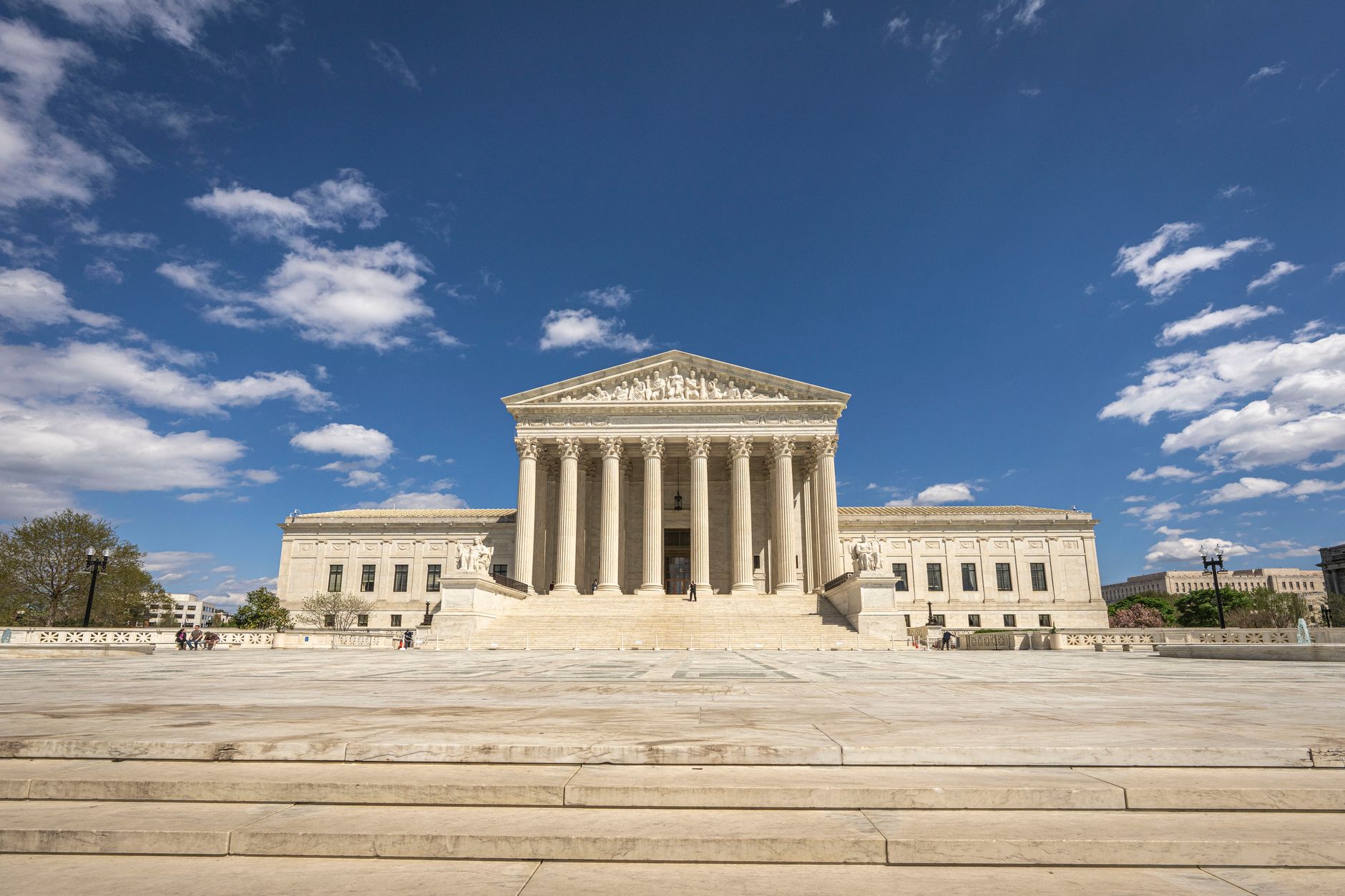
The Supreme Court issues a handful of immigration-related decisions each term, and the downstream effects on visa applicants, green card holders, and asylum seekers can be significant. Unlike congressional legislation, which requires extended debate and passage, a Supreme Court ruling can alter how federal agencies interpret and enforce existing statutes overnight. Understanding which cases matter - and why - helps applicants anticipate how adjudicators at USCIS, CBP, and immigration courts will handle their cases.
This article covers several landmark and recent Supreme Court rulings, explains what each decision changed in practical terms, and identifies which categories of immigrants are most directly affected. This is not legal advice, and individual circumstances vary considerably; readers should consult a licensed immigration attorney before making decisions based on any court ruling.
How Supreme Court Decisions Filter Down to Applicants
From Opinion to Agency Policy
When the Supreme Court issues a ruling, federal agencies are required to align their practices with that decision. USCIS typically responds through policy memoranda or updates to the USCIS Policy Manual, while immigration courts operate under guidance from the Executive Office for Immigration Review (EOIR). The timeline between a Supreme Court opinion and visible changes at the adjudication level can range from weeks to several months.
One practical example is Niz-Chavez v. Garland (2021), in which the Court held that a Notice to Appear (NTA) must contain all required information - including the date and time of a hearing - in a single document to trigger the “stop-time rule” under 8 U.S.C. § 1229b. Before this ruling, the government’s practice was to issue NTAs without hearing dates and follow up with a separate hearing notice. The Niz-Chavez decision meant that defective NTAs could no longer cut off the accrual of continuous physical presence needed to qualify for cancellation of removal. For applicants who had received incomplete NTAs, this opened a renewed window to argue eligibility for cancellation.
EOIR subsequently had to revisit how immigration judges evaluated stop-time arguments. Respondents who had previously been found ineligible for cancellation based on defective NTAs gained grounds to file motions to reconsider or reopen their cases. The practical effect was most pronounced for non-LPR cancellation of removal cases under INA § 240A(b), which requires ten years of continuous physical presence.
Key Decisions and Their Direct Effects
Biden v. Texas (2022) and the “Remain in Mexico” Policy
In Biden v. Texas (2022), the Supreme Court held in a 5-4 decision that the Biden administration had the legal authority to terminate the Migrant Protection Protocols (MPP), commonly known as the “Remain in Mexico” policy. The Court found that the Department of Homeland Security had the discretion to end the program and was not required to maintain it under the INA.
The practical effect was that DHS formally terminated MPP in October 2022. Individuals who had been enrolled in MPP and had pending immigration court cases were no longer required to wait in Mexico for their hearings. EOIR and DHS jointly processed case transfers for affected individuals, allowing them to pursue their cases from within the United States. Approximately 70,000 individuals had active MPP enrollments at the time of termination. For those with still-pending cases, the transition involved re-scheduling hearings and, in some instances, re-issuing NTAs with updated information.
Johnson v. Guzman Chavez (2021) and Withholding-Only Proceedings
In Johnson v. Guzman Chavez (2021), the Court ruled 6-3 that individuals who had previously been ordered removed but re-entered the United States and then claimed fear of persecution were subject to reinstatement of their original removal orders and could only seek protection through “withholding-only” proceedings - not full removal proceedings with a wider range of potential relief.
This distinction matters significantly for applicants. In withholding-only proceedings, a person cannot apply for asylum under INA § 208, which has a one-year filing deadline and can result in a grant of asylee status. Instead, they are limited to withholding of removal under INA § 241(b)(3) or protection under the Convention Against Torture (CAT). Withholding of removal does not lead to a green card, does not include a direct path to citizenship, and does not confer the same derivative benefits to family members. The Court’s ruling confirmed a narrower procedural channel for this population, and immigration judges in withholding-only proceedings cannot consider alternative forms of relief such as cancellation of removal or adjustment of status.
Chevron Deference and Its Implications for Immigration Agencies
Loper Bright Enterprises v. Raimondo (2024)
In June 2024, the Supreme Court overruled Chevron U.S.A. v. Natural Resources Defense Council in Loper Bright Enterprises v. Raimondo, ending the longstanding doctrine under which courts deferred to federal agencies’ reasonable interpretations of ambiguous statutes. Under the old Chevron framework, if the INA was ambiguous on a point and USCIS or the BIA had a reasonable interpretation, courts generally upheld the agency’s position. That deference is now gone.
For immigration law, the removal of Chevron deference has wide-ranging implications. Courts are now required to independently interpret ambiguous provisions of the INA rather than simply accepting agency interpretations as controlling. This means that USCIS policy positions - including those embedded in the USCIS Policy Manual and BIA precedent decisions - are more vulnerable to judicial challenge than they were before June 2024. Petitioners who have been denied benefits based on agency interpretations of ambiguous statutory language now have stronger grounds to argue in federal court that the agency’s reading was incorrect, regardless of whether it was “reasonable.”
What This Means for Pending and Future Cases
The practical effect of Loper Bright is still developing, but several areas of immigration law involve statutory ambiguities that courts will now interpret independently. These include the definition of “exceptional ability” under the EB-2 classification, the meaning of “extraordinary ability” under INA § 101(a)(15)(O), and the scope of hardship determinations in waiver applications. Immigration attorneys are already filing appeals and motions in federal court that explicitly invoke the end of Chevron deference to challenge agency denials that relied on long-standing but potentially incorrect interpretations.
USCIS has not yet issued comprehensive guidance on how Loper Bright affects its adjudication standards, but the agency is aware that its interpretive positions now carry less judicial insulation than before. Applicants whose petitions were denied based on agency interpretations of ambiguous statutory terms - particularly in the employment-based categories - may want to assess whether a federal court challenge is viable under the post-Loper Bright standard.
Asylum and Bars to Protection: Pereida v. Wilkinson (2021)
In Pereida v. Wilkinson (2021), the Court held 5-3 that an immigrant who had been convicted of a crime bears the burden of proving that the offense was not a disqualifying “crime involving moral turpitude” (CIMT) when state statutes are divisible and the record of conviction is inconclusive. Under prior circuit court practice, ambiguity in the record often benefited the applicant. After Pereida, that ambiguity works against them.
The ruling directly affects applicants seeking cancellation of removal under INA § 240A(b), which requires that the applicant not have been convicted of a CIMT within ten years of applying. Where a state criminal statute covers both CIMT and non-CIMT conduct, and the conviction record does not clearly identify which conduct formed the basis of the plea or verdict, the applicant must affirmatively establish that the conviction did not involve a CIMT. If the record is silent or unclear, the application will fail. Respondents in removal proceedings who have any prior state criminal convictions - even for minor offenses - should obtain complete certified records of conviction and, where possible, underlying plea transcripts before their cases are heard by an immigration judge.