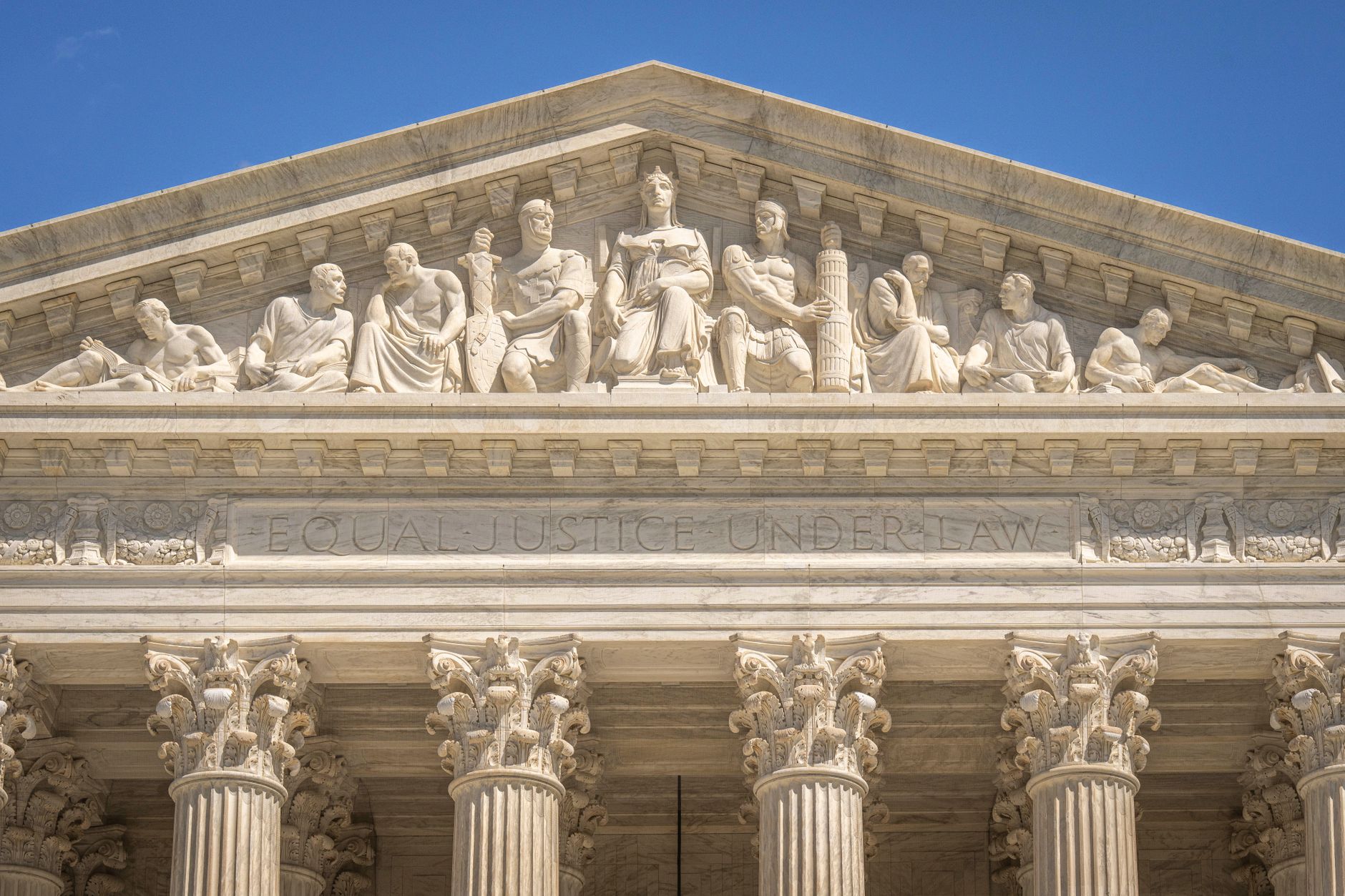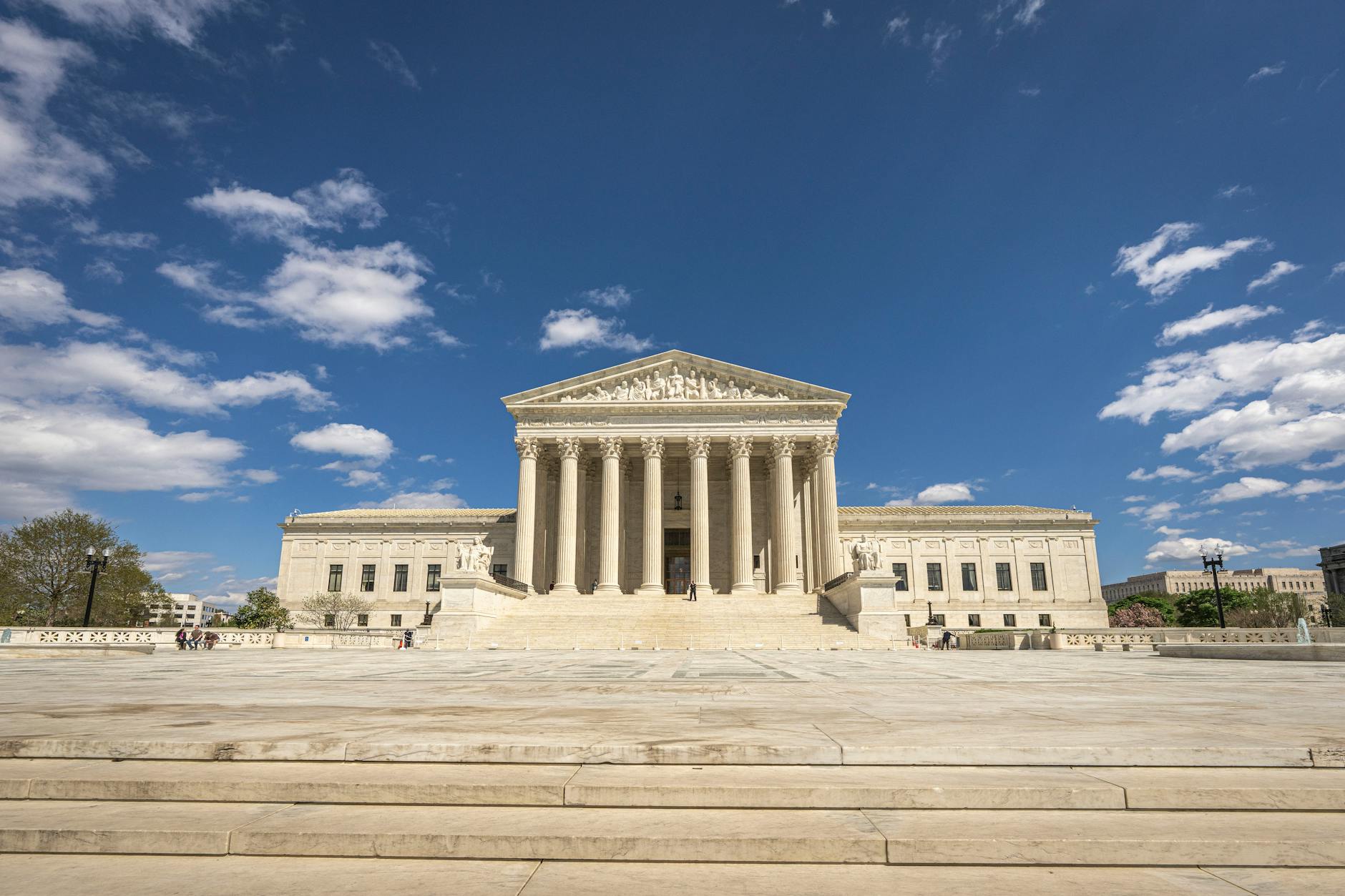
The Supreme Court has issued several consequential immigration decisions in recent years, and the effects are now visible in how USCIS processes applications, how immigration courts handle cases, and what options remain available to noncitizens facing removal. Understanding what the Court actually held - and what it did not - helps applicants and their families make more informed decisions.
Garland v. Aleman Gonzalez and Limits on Federal Court Review
In Garland v. Aleman Gonzalez (2022), the Supreme Court held 8-1 that federal district courts lack jurisdiction to issue class-wide injunctions blocking immigration detention practices under 8 U.S.C. § 1252(f)(1). The ruling effectively stripped lower federal courts of the power to order the government to release or modify conditions for entire groups of detained immigrants at once. Individual habeas petitions remained available, but systemic challenges through class actions became significantly harder to bring.
The practical effect was immediate. Several ongoing class-action lawsuits challenging prolonged detention without bond hearings lost their legal footing in district courts. Immigrants detained under mandatory detention provisions - typically those with certain criminal convictions under 8 U.S.C. § 1226(c) - found that they could no longer rely on federal district court orders securing bond hearings as a class. Instead, each individual had to pursue their own habeas petition in the district where they were detained, a process that is slower and more expensive.
For detained individuals, this meant longer waits and greater dependency on immigration judges within the Executive Office for Immigration Review (EOIR) to grant bond. EOIR immigration judges have authority to hold bond hearings in certain circumstances, but the statutory framework under § 1226(c) sharply limits that authority for those with qualifying criminal records. The decision did not eliminate all relief, but it narrowed the procedural pathways considerably.
Attorneys representing detained clients responded by shifting strategy toward individual habeas petitions filed in federal district courts, arguing case-by-case that prolonged detention violated due process. Courts have handled these petitions inconsistently across circuits, meaning the outcome of a habeas claim can depend significantly on where a person is detained.
Garland v. Cargill and the Broader Pattern of Statutory Interpretation
While Garland v. Cargill (2024) addressed bump stocks rather than immigration directly, the Court’s approach to statutory interpretation in that case reinforced a broader pattern that is shaping immigration litigation. The 6-3 majority applied strict textualism, holding that agency rules cannot expand statutory definitions beyond their plain text. Immigration advocates have pointed to this interpretive framework as a warning sign for certain USCIS policy expansions that rely on broad readings of the Immigration and Nationality Act (INA).
This matters in immigration because USCIS and the Department of Homeland Security frequently issue policy guidance and rules that interpret INA provisions expansively to extend benefits or protections. The DACA program, for example, has faced repeated legal challenges partly on the ground that the INA does not explicitly authorize the executive branch to grant deferred action on a categorical basis. A Court committed to strict textualism is more likely to find such programs lack statutory authority.
The Biden administration’s parole-in-place program for certain undocumented spouses of U.S. citizens, announced in August 2024, immediately became a litigation target under this interpretive theory. Federal courts in several districts issued preliminary injunctions pausing implementation, with judges questioning whether 8 U.S.C. § 1182(d)(5), the statutory parole authority, permits categorical grants of parole to people already present in the United States without inspection. Those legal challenges remained active as of early 2025.
For applicants relying on categorical executive programs rather than individual statutory benefits, the current Court’s textualist approach creates genuine uncertainty about long-term program survival. An I-485 (Application to Register Permanent Residence or Adjust Status) filed based on an underlying benefit that later loses judicial approval can be denied even after significant processing time and filing fees have been spent.
The safest benefits to rely on remain those with explicit statutory bases - family-based petitions under INA § 203, employment-based petitions filed on Form I-140, and asylum claims under INA § 208. These have clear textual footing that does not depend on executive interpretation.
Biden v. Texas and the Limits of Executive Discretion
In Biden v. Texas (2022), the Supreme Court did not decide the ultimate merits of the “Remain in Mexico” policy (formally the Migrant Protection Protocols, or MPP), but it remanded the case in a way that required the Biden administration to either restart MPP or adequately explain why terminating it was lawful. The decision underscored that courts will scrutinize executive decisions to end immigration enforcement programs with the same rigor applied to decisions to begin them.
The case established that when an administration terminates a formal enforcement program, it must comply with the Administrative Procedure Act (APA), specifically 5 U.S.C. § 706, which requires agency action to not be “arbitrary, capricious, an abuse of discretion, or otherwise not in accordance with law.” DHS ultimately provided a more detailed explanation for ending MPP, and the policy was formally terminated in 2023 after meeting procedural APA requirements. The litigation nonetheless delayed the termination by more than a year.
Department of Homeland Security v. Regents of the University of California - Ongoing Relevance
The 2020 decision in Department of Homeland Security v. Regents of the University of California remains one of the most practically significant recent Supreme Court immigration rulings. The Court held 5-4 that the Trump administration’s first attempt to end DACA was “arbitrary and capricious” under the APA because DHS failed to adequately consider the reliance interests of DACA recipients. This ruling did not find DACA to be legally required - only that the rescission process was procedurally flawed.
The decision’s lasting importance is the reliance interest framework it established. USCIS has cited it internally when assessing whether program changes require a formal notice-and-comment rulemaking period. Any administration seeking to end or significantly alter a long-standing benefit program now faces a heightened obligation to address the expectations of those who structured their lives around that program. For DACA recipients specifically, USCIS continued accepting renewal applications following the ruling, using Form I-821D and Form I-765 for employment authorization.
DACA itself remains in litigation before the Fifth Circuit as of early 2025, with the legal question of the program’s statutory authority still unresolved. Recipients whose renewals are pending should track the case Texas v. United States for further developments, as a final adverse ruling could affect renewal processing immediately.
What These Decisions Mean for Applicants Right Now
The cumulative effect of these rulings is a legal environment where statutory benefits are more secure than executive-created programs, where class-wide judicial relief from detention is largely unavailable, and where any agency action taken without proper APA procedure is vulnerable to being struck down regardless of which administration initiates it.
For individuals with pending applications, the form and statutory basis of the underlying benefit matters more than ever. An I-130 (Petition for Alien Relative) filed by a U.S. citizen for an immediate relative sits on firm statutory ground under INA § 201(b). A benefit derived from a policy memorandum or executive order rests on far less stable footing in the current legal climate.
Readers should consult a licensed immigration attorney for advice specific to their individual circumstances and case status.
USCIS processing times and case status can be checked directly at uscis.gov/case-status-online using the receipt number from any official USCIS notice.